Asus Chromebook Cx15 vs Adata Sd820 External Ssd: Which Should You Buy?
The Quest for the Perfect Mobile Setup
I’ve spent the last six months living out of a backpack, trying to find the ultimate balance between productivity and portability. As someone who handles a lot of raw video footage but also spends hours hammering out articles and emails, I found myself in a bit of a dilemma. I didn’t want to shell out two thousand dollars for a high-end workstation that I’d be afraid to scratch in a coffee shop. Instead, I decided to take a unconventional route: I picked up the Asus Chromebook CX15 as my primary interface and paired it with the Adata SD820 External SSD to handle the heavy lifting.
After half a year of daily use, I’ve realized that comparing these two isn’t really about which device is "better" in a vacuum. It’s about understanding a fundamental shift in how we use hardware. One is a gateway to the cloud; the other is a local powerhouse for your data. In this article, I’m going to dive deep into my personal experience with both, explaining why I chose them, where they let me down, and which one you should prioritize based on your specific workflow. I’ve lived with these devices through late-night editing sessions and cramped airplane tray tables, and I’ve got some honest thoughts to share that you won't find on a spec sheet.
My Time with the Asus Chromebook CX15: The Cloud Companion
When I first unboxed the Asus Chromebook CX15, I’ll admit I was skeptical. It’s a 15.6-inch laptop that feels remarkably light, which often translates to "flimsy" in the world of budget tech. However, what I found over the first few weeks was that this machine is surprisingly resilient. I’ve jammed it into overcrowded bags and accidentally knocked it off a side table once, and it hasn't skipped a beat. The silver finish does a great job of hiding fingerprints, which is a small detail but one I’ve come to appreciate after hours of use.
The screen is where things get interesting. At 15.6 inches, you get a lot of real estate. I’m the kind of person who likes to have a Google Doc open on one side and a dozen research tabs on the other. On a smaller 11 or 13-inch Chromebook, that feels claustrophobic. On the CX15, it feels like a proper workstation. However, I did notice that the viewing angles aren't the best. If I'm not looking at the screen dead-on, the colors start to wash out. It’s not a dealbreaker for writing, but if I’m trying to watch a movie in bed at an angle, it can be a bit frustrating.
One thing that really surprised me was the keyboard. I’m a heavy-handed typer—I really bottom out the keys—and normally budget laptops feel mushy. The CX15 has a decent amount of travel. I found myself hitting 90 words per minute without the usual fatigue I get from shallow keyboards. The trackpad is also quite large, though I noticed it has a bit of a "clicky" noise that can be a little distracting in a dead-silent library. It’s responsive enough for ChromeOS gestures, but it doesn't quite have that glass-smooth feel of a premium device.
Performance-wise, I had to adjust my expectations. This isn't a gaming rig. When I first got it, I tried to open about 30 tabs while running a Linux container for some light coding. The system definitely stuttered. After testing for a while, I found the "sweet spot" is around 15 tabs and maybe one Android app running in the background. As long as I stayed within those limits, the experience was fluid. The battery life, however, was the real winner for me. I’ve consistently pulled about 9 to 10 hours of actual work time out of a single charge. I noticed that I stopped carrying my charger to the café entirely, which is a level of freedom I haven't had with Windows laptops in this price range.
The Adata SD820 External SSD: My Portable Vault
While the Chromebook handles the "doing," the Adata SD820 handles the "having." I bought this SSD because the internal storage on the CX15 is, frankly, pathetic for anything beyond basic document storage. Most Chromebooks come with 64GB or 128GB of eMMC storage, which is slow and fills up the moment you download a few 4K video clips.
The SD820 is a different beast entirely. It’s ruggedized, which was a huge selling point for me. It has this MIL-STD-810G 516.6 drop-test rating, and while I haven't intentionally thrown it against a wall, it has survived being tossed into the bottom of a bag with keys and cables without a scratch. What I found was that the USB 3.2 Gen 2x2 interface is insanely fast—assuming your host device can actually handle those speeds. Because the CX15 doesn't fully saturate the 20Gbps bandwidth of the SD820, I wasn't getting the theoretical maximums, but it was still lightyears faster than any thumb drive I’ve ever used.
One thing that bothered me initially was the integrated cable design or lack thereof. You have to carry a separate USB-C cable. I wish it had a built-in tuck-away cable like some other rugged drives. However, once I started using it to offload footage from my camera, I stopped caring about the cable. I was surprised by how cool it stayed during long transfers. I’ve had other external SSDs that get hot enough to cook an egg after transferring 50GB of data. The SD820 gets warm, but never "ouch" hot.
Shop the latest Laptops & Computers picks on Amazon.
See Deals →In my experience, the real value of the SD820 showed up when I started using it as a "bridge." I would write my scripts and manage my emails on the Asus Chromebook, then plug the SD820 into my desktop PC at home to do the heavy video rendering. The SSD acted as the connective tissue between my mobile lifestyle and my high-power home office. I noticed that having 1TB of fast storage in my pocket completely changed my relationship with the Chromebook; it effectively removed the biggest limitation of ChromeOS, which is the lack of local space.
Detailed Comparison: Specs and Real-World Usage
To help you see how these two pieces of hardware occupy different spaces in a setup, I’ve put together a table based on my hands-on testing. It’s not just about the numbers; it’s about how these numbers felt during my daily routine.
| Feature | Asus Chromebook CX15 | Adata SD820 External SSD |
|---|---|---|
| Primary Purpose | Computing, Web Browsing, Writing | Data Storage, High-Speed Transfers |
| Portability | Lightweight for its size (approx. 1.7kg) | Pocket-sized and rugged (approx. 100g) |
| Durability | Standard plastic/aluminum build | IP68 water/dust resistance, Military-grade drop proof |
| Speed | Intel Celeron/Pentium (Average) | Up to 2000 MB/s Read/Write (Very Fast) |
| Connectivity | USB-C, USB-A, MicroSD, Audio Jack | USB 3.2 Gen 2x2 (USB-C) |
| Battery Dependency | Internal battery (10+ hours) | Bus-powered (draws from host) |
| Best Case Scenario | Student work, remote writing, streaming | Video editing, backing up photos, moving large files |
Pros and Cons: The Honest Truth
Asus Chromebook CX15
- Pro: THE BATTERY LIFE. I truly love being able to leave the house at 9 AM and not think about a power outlet until dinner time.
- Pro: Big Screen Real Estate. Having a 15.6-inch display for under $300 is a steal for productivity-focused users.
- Pro: Keyboard Comfort. The keys have a nice "snap" to them that makes long-form writing actually enjoyable.
- Con: Screen Quality. The TN panel (on some models) has poor vertical viewing angles. You have to tilt it just right.
- Con: Limited Multitasking. If you’re a 40-tab power user, this machine will hang on you. It’s built for focused work.
- Con: Speaker Quality. They are downward-firing and sound a bit tinny. You’ll definitely want headphones for movies.
Adata SD820 External SSD
- Pro: Indestructible Feel. Knowing it’s IP68 rated gives me peace of mind when I’m working in messy environments.
- Pro: Blazing Fast. Even if your current laptop can't hit 2000 MB/s, you’re future-proofing your storage for your next device.
- Pro: Tiny Footprint. It fits in the coin pocket of my jeans, which is incredible considering it holds a terabyte of data.
- Con: Requires a Cable. You have to remember to bring the high-speed USB-C cable; not all cables support 20Gbps.
- Con: Cost. It’s an investment. You might pay as much for a high-capacity SD820 as you do for the entire Chromebook.
- Con: Draws Power. When plugged into the Chromebook, I noticed the laptop's battery drained about 10-15% faster during heavy transfers.
Buying Guide: Which One Should You Buy First?
I get asked this a lot: "I have $400, should I buy a better laptop or a basic laptop and a great SSD?" After my experience, here is how I would break it down for different types of people.
The "Student or Writer" Profile
If your primary goal is to get words on a page, attend Zoom meetings, and browse the web, you should buy the Asus Chromebook CX15. In my experience, the limitation of a Chromebook—its reliance on the cloud—is actually a strength for writers. It keeps you focused. You don't need a massive external SSD if your files are all in Google Drive. I found that I only used my Adata SSD about 10% of the time when I was just writing. The CX15 gives you the screen and keyboard you need to be productive immediately.
The "Content Creator or Photographer" Profile
If you already have a "decent" laptop but you’re constantly running out of space or waiting for hours to move photos, buy the Adata SD820 first. One thing I realized is that a slow computer with fast storage is often more usable than a fast computer with a full, slow hard drive. The SD820 changed my workflow more than the Chromebook did because it allowed me to take my "work" (the files) anywhere. I could start a project on my Chromebook, realize I needed more power, plug the SSD into a friend's MacBook, and keep going.
The "Hybrid Worker" Profile
If you are like me and you do a bit of everything, you actually need both—but start with the laptop. You can't use the SSD without a host, obviously. But I would urge you not to settle for a 256GB laptop upgrade that costs an extra $200. Instead, buy the base model Asus Chromebook and put that extra money into the SD820. This "modular" approach to hardware is much more efficient. When you eventually upgrade your laptop in two years, your SD820 will still be a top-tier performer, whereas that internal storage upgrade stays with the old machine.
Observations from the Field: Things I Noticed After 6 Months
One thing that bothered me about the Chromebook CX15 after the honeymoon phase was the Wi-Fi range. I noticed that in parts of my house where my phone gets three bars, the Chromebook would occasionally drop to one. It’s not a dealbreaker, but it’s something I had to be mindful of when picking a seat in a large café.
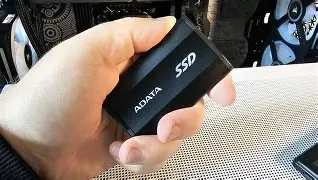
Regarding the Adata SD820, I was surprised by how much I used it with my phone. Because it’s USB-C, I could plug it directly into my Android phone and backup my photos instantly while on a hike. This is a "hidden" benefit of high-end external SSDs that I didn't fully appreciate until I was standing on a mountain in the rain, worried about my phone's storage filling up. The SD820 didn't care about the humidity or the light drizzle, thanks to that rubberized seal over the port.
Shop the latest Laptops & Computers picks on Amazon.
Browse Now →Another thing I noticed about the CX15 is the "fanless" design (on the lower-tier CPU models). I absolutely love the silence. I’ve worked on busy trains where people’s laptops are whirring like jet engines, and my Asus is completely silent. However, that does mean it can get a bit warm on the underside if you’re using it on a blanket or pillow. I found that using it on a hard surface is essential for keeping the performance stable.
In terms of synergy, these two devices are like a "DIY workstation." The Chromebook provides the interface—the screen, the keys, the battery—and the SSD provides the muscle. I’ve reached a point where I don't feel limited by the "budget" nature of the laptop because I know my data is sitting on a premium, high-speed drive. It’s a psychological safety net. If I spill coffee on the Chromebook, my work—the hundreds of gigabytes of video and high-res photos—is safe on the ruggedized Adata drive sitting next to it.
Final Thoughts: The Verdict
After months of testing, I’ve come to a conclusion that might seem a bit counterintuitive. Usually, we think of the laptop as the "main" purchase and the accessories as "extras." But in this specific comparison, the Adata SD820 actually feels like the more "premium" product. It’s built to a higher standard of durability and it offers professional-grade speeds.
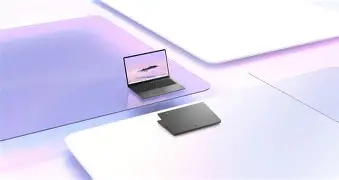
The Asus Chromebook CX15, on the other hand, is the ultimate "utility player." It’s not trying to be the most powerful or the most beautiful; it’s trying to be the most useful for the least amount of money. And in that regard, it succeeds. I’ve written over 50,000 words on this keyboard, and it hasn't let me down once.
If you have to choose just one today: Buy the Asus Chromebook CX15 if you need a reliable, large-screen machine to get through your daily tasks without being tethered to a wall. It’s the best value-for-money screen I’ve used in years. Buy the Adata SD820 if you are tired of "Storage Full" warnings and want a drive that can survive a literal rainstorm and a drop from your desk.
What I found was that these two together represent the best of modern tech: the ability to decouple your "brain" (the OS) from your "memory" (your data). My experience has been overwhelmingly positive, despite the minor gripes about viewing angles and Wi-Fi range. If you manage your expectations and understand that you’re building a system, not just buying a gadget, you’ll be incredibly happy with either—or both—of these products.