Fluance Ri71 Specs, Features, and Value: Is it worth the price tag?
The Fluance Ri71 enters a crowded market of powered bookshelf speakers with a clear pitch: deliver more serious stereo sound than a typical compact wireless speaker, while staying simpler and more living-room-friendly than a full separates system. For buyers who want a cleaner setup for music, television, vinyl, or desktop listening, that proposition is easy to understand. The harder question is whether the Ri71 truly justifies its asking price in a field packed with strong alternatives.
On paper, the Ri71 looks promising. It combines a 5-inch woven glass fiber woofer, a 1-inch Air Motion Transformer tweeter, 120 watts RMS of built-in Class D amplification, HDMI ARC for television use, Bluetooth 5.0 with aptX HD, an internal DAC supporting high-resolution playback up to 24-bit/192kHz, and a subwoofer output with an 80Hz high-pass crossover. Those are meaningful features, not just marketing filler. They target exactly what many shoppers care about: clarity, easy setup, TV compatibility, and enough flexibility to cover more than one use case.
In practical terms, the Ri71 is aimed at buyers who want one pair of speakers to do several jobs well. That may mean replacing a soundbar in a small or medium-size living room, upgrading from entry-level computer speakers in a home office, or serving as a stylish all-in-one stereo system for streaming and casual record listening. The Ri71 is not trying to be a network streamer, a smart speaker, or a bass-heavy party system. It is trying to be a straightforward, better-sounding powered speaker pair for people who value stereo imaging, vocal clarity, and musical detail.
This article takes a close look at the Fluance Ri71’s specifications, design choices, sound quality, strengths, weaknesses, and overall value. For buyers wondering whether it is worth the price tag, the answer depends less on the brand name and more on how the speaker’s particular mix of performance and features fits real-world needs.
Fluance Ri71 at a glance
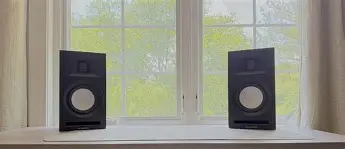
The Fluance Ri71 is a powered two-way bookshelf speaker system. One cabinet houses the amplification and input section, while the second speaker is passive and connects to the main unit using speaker cable. This is a common powered-speaker layout because it keeps setup simple while avoiding the need for a separate integrated amp or AV receiver.
Its standout feature is the use of an AMT tweeter, which is still relatively uncommon at this price point. Air Motion Transformer tweeters are prized for fast transient response and airy treble presentation, and they are often associated with more expensive hi-fi gear. Fluance pairs that tweeter with a mid-bass driver sized appropriately for bookshelf use, then adds lifestyle-friendly inputs like HDMI ARC and Bluetooth.
That combination makes the Ri71 unusual. Many powered speakers focus either on desktop convenience or on TV duty, but fewer attempt to bridge both while still marketing themselves as hi-fi products. For the right buyer, that makes the Ri71 especially interesting.
Key specifications and what they mean
Driver configuration and cabinet design
The Ri71 uses a 1-inch AMT tweeter with a custom waveguide and a 5-inch woven glass fiber composite woofer. In simple terms, this driver pairing suggests a tuning philosophy centered on speed, articulation, and controlled detail rather than exaggerated warmth or overblown bass. The woven woofer material should offer a solid balance of stiffness and damping, helping maintain clarity in the midrange while still providing useful low-end output for its size.
The cabinets are built from MDF with curved side panels, a design choice that is not purely cosmetic. Curved cabinets can help reduce internal standing waves and minimize boxy resonance compared with simple rectangular enclosures. Buyers who care about build quality often overlook cabinet construction, but it matters. A well-braced, less resonant cabinet helps the drivers sound cleaner and more composed.
Amplification and power
Fluance rates the Ri71 at 120 watts RMS total, or 2 x 60 watts via Class D amplification. That figure should be enough for most normal uses: desktop listening, bedroom systems, small apartments, and many living-room setups. It is not the kind of power reserve designed to fill a large open-plan space at party volume, but for nearfield and moderate-room listening it appears appropriately specified.
What matters more than the number alone is how that power is used. In powered speakers, matched amplification can offer good driver control and a cleaner, more predictable sound than piecing together low-cost passive speakers and a random mini amp. Buyers who want simplicity without sacrificing competence often find this approach appealing.
Connectivity
The Ri71 includes HDMI ARC, RCA analog input, and Bluetooth 5.0 with codec support including aptX HD, aptX Low Latency, AAC, and SBC. That is a practical selection. HDMI ARC makes television integration much easier, particularly for users who want to control speaker volume from the TV remote and avoid the friction of separate remotes and awkward output settings.
Bluetooth support is equally relevant for real households. Many people stream music casually from phones, tablets, or laptops, even when they care about sound quality. aptX HD support helps the Ri71 appeal to listeners who want better wireless performance than the basic Bluetooth experience often found in cheaper speakers.
The notable omissions are optical input, USB audio, and built-in Wi-Fi streaming. Those missing features will matter to some buyers. Anyone wanting direct connection to a computer without an external DAC, or direct use with certain TVs and game consoles via optical, may see the input list as somewhat limited.
Subwoofer support and DAC
The Ri71 includes a subwoofer output with an 80Hz high-pass filter. This is one of the more useful value-oriented features in the package. Many powered speakers offer a sub out, but not all handle bass management intelligently. By filtering the main speakers when a sub is added, the Ri71 can reduce strain on the bookshelf pair and improve clarity in the midrange and upper bass.
Discover deals on Audio & Headphones — updated daily.
See Deals →Its internal DAC supports up to 24-bit/192kHz, which adds reassurance for buyers using modern digital sources through supported inputs. While specifications like that can be overemphasized in marketing, they do indicate that Fluance did not treat the digital stage as an afterthought.
Design, usability, and everyday setup
The Fluance Ri71 is designed to fit into modern interiors without looking overtly technical. Finish options such as black ash, white, and natural walnut help it appeal to buyers furnishing living spaces, not just hobby rooms. This matters because many powered speakers are judged as much by where they go as by how they measure.
In terms of physical size, the Ri71 remains compact enough for media consoles, bookshelves, and sturdy desks, though it is better viewed as a proper bookshelf speaker than a tiny desktop monitor. It should have enough enclosure volume to sound fuller than smaller lifestyle speakers, but it still needs some breathing room for the best performance.
Setup appears refreshingly straightforward. A buyer can connect the main speaker to a TV via HDMI ARC, pair a phone over Bluetooth for music, or connect an analog source such as a streamer or external phono preamp through RCA. For someone who does not want an AV receiver, passive speakers, and multiple boxes, that simplicity is a major part of the value proposition.
There are tradeoffs. Reports indicate the included remote is functional rather than premium, and the glossy front surface can show dust more easily than matte finishes. Those are not deal-breakers, but they are the sort of small daily annoyances that matter once the honeymoon period ends.
Sound quality analysis
Treble and detail retrieval
The Ri71’s strongest sonic trait is likely its treble presentation. AMT tweeters tend to sound fast, open, and airy, and that aligns with how the Ri71 has been characterized in reviews. This can be particularly appealing for acoustic music, jazz, vocals, and well-recorded pop, where cymbal texture, room ambience, and vocal nuances help create a more lifelike presentation.
For buyers moving up from a typical soundbar or budget Bluetooth speaker, this is often the first major difference they notice. Instead of hearing a flat wall of sound, they hear more separation between instruments and a greater sense of space. That is one reason the Ri71 may appeal strongly to listeners who prioritize musical engagement over sheer output.
Midrange performance
Midrange quality is where a speaker earns long-term loyalty, and the Ri71 seems tuned with that in mind. Dialogue intelligibility for TV and film should be one of its practical strengths, especially compared with many compact soundbars that emphasize upper bass and top-end sparkle without enough natural body in the middle. For music, a strong midrange helps voices, guitars, piano, and podcasts sound more believable.
This is especially important in mixed-use systems. Many buyers are not building a dedicated listening room; they want one system that can handle streaming playlists during the day and television in the evening. A clean, intelligible midrange makes that possible.
Bass response and limitations
The area where expectations need to stay realistic is bass. A 5-inch woofer in a compact bookshelf cabinet can only do so much. The Ri71 reaches low enough for satisfying everyday listening, but buyers wanting deep cinematic impact, chesty EDM thump, or full-range performance in a larger room should assume a subwoofer will improve the system significantly.
This does not necessarily count against the speaker. In fact, Fluance deserves some credit for including proper sub integration rather than pretending physics does not exist. For apartments, condos, and smaller rooms, the Ri71 may have enough bass on its own. For home theater and bass-heavy music, pairing it with a compact sub would likely unlock much better overall performance.
Imaging and soundstage
One of the Ri71’s more compelling advantages over a soundbar is true stereo imaging. With proper placement, it should create a wider, more dimensional soundstage than a single-box TV speaker solution. This matters for both music and movies. Instruments can sound more precisely placed, and on-screen effects can feel less collapsed into the center of the room.
That benefit is often underestimated by buyers comparing price tags alone. A soundbar may offer convenience, but a well-implemented pair of stereo speakers usually delivers a more convincing sense of width and natural separation. For many listeners, that alone is enough to justify choosing something like the Ri71.
Pros and cons
Pros
- Excellent clarity and openness for the price, helped by the AMT tweeter design
- HDMI ARC makes it a practical TV upgrade and a strong soundbar alternative
- Bluetooth with aptX HD adds flexible wireless listening for everyday use
- Subwoofer output with high-pass filtering makes future system expansion easy and worthwhile
- Attractive cabinet design and finish options suit living spaces as well as offices
- Simple all-in-one setup eliminates the need for a separate amplifier or receiver
- Strong midrange and stereo imaging make music and dialogue more engaging
Cons
- Low bass is limited compared with larger speakers or systems with a subwoofer
- No optical, USB, or Wi-Fi streaming, which may reduce flexibility for some buyers
- Remote and minor finish details appear less premium than the speaker concept suggests
- Not ideal for very large rooms or listeners who prioritize maximum output
- Analog turntable users still need a phono stage unless their turntable includes one
How the Fluance Ri71 compares in value
The Ri71’s value depends on what a buyer considers essential. If the buyer wants every modern convenience feature in one box, including Wi-Fi streaming, app control, USB audio, and multiple digital inputs, the Ri71 may feel lean. But if the priority is sound quality first, sensible connectivity second, and clean aesthetics throughout, it makes a stronger case.
Compared with cheaper powered speakers, the Ri71 appears to justify its premium through better driver technology, better cabinet design, and a more mature feature mix. Compared with more expensive lifestyle systems, it may give up some convenience and ecosystem polish while still offering highly competitive sound-per-dollar performance.
Discover deals on Audio & Headphones — updated daily.
Browse Now →| Category | Fluance Ri71 | Typical budget powered speakers | Typical premium wireless speakers |
|---|---|---|---|
| Tweeter design | AMT tweeter for airy, detailed treble | Usually standard dome tweeter | Often high-quality dome or coaxial design |
| TV connectivity | HDMI ARC included | Often RCA or optical only | Usually strong TV support |
| Wireless audio | Bluetooth 5.0 with aptX HD | Basic Bluetooth | Bluetooth plus Wi-Fi streaming ecosystems |
| Subwoofer integration | Sub out with 80Hz high-pass filter | Sometimes limited or absent | Usually available, sometimes app-managed |
| Deep bass on its own | Good for size, but limited | Usually modest | Varies, often stronger but at higher cost |
| Best fit | Music-first TV and stereo users | Entry-level desks and casual listening | Feature-focused buyers with larger budgets |
| Overall value | Strong if sound quality is the top priority | Strong for low budgets | Strong for convenience, weaker on price efficiency |
Who should buy the Fluance Ri71?
The Ri71 makes the most sense for a buyer who wants a noticeable step up from ordinary consumer audio without building a full traditional hi-fi system. That includes several common use cases.
For TV viewers: it is appealing to people unhappy with flat soundbar performance but unwilling to deal with an AV receiver and multiple passive speakers. HDMI ARC makes day-to-day use simple, while stereo separation adds more natural width and detail.
For music listeners: it is well suited to people who stream from a phone or tablet but still care about tonal balance, imaging, and a less compressed presentation. Its AMT tweeter may be particularly attractive to listeners who enjoy acoustic recordings, female vocals, jazz ensembles, or well-produced pop.
For desktop and office users: it can work well in larger desk setups where tiny computer speakers feel underpowered and uninvolving. However, buyers should make sure they have enough physical space and should note the lack of USB audio.
For vinyl owners: it can be a good match only if the turntable has a built-in phono preamp or is paired with an external one. Those expecting direct turntable hookup from any deck should verify their source equipment first.
Buying guide: what shoppers should consider before paying the price
Room size and placement
Before buying the Ri71, shoppers should think honestly about room size. In a small or medium room, it should offer satisfying output and good scale. In a large open living area, especially one with high ceilings, it may sound cleaner than a budget system but still somewhat light unless backed by a subwoofer.
Placement matters too. Like most bookshelf speakers, the Ri71 will benefit from being set at roughly ear height, spaced properly, and given some room from the back wall. Buyers planning to tuck them tightly into shelves should temper expectations.
Source devices and connection needs
This is one of the most important buying decisions. If the planned system revolves around a TV with HDMI ARC and a phone for Bluetooth streaming, the Ri71 is a natural fit. If the system needs USB from a computer, optical from a legacy TV, or direct app-based streaming over Wi-Fi, other speakers may be more convenient.
Music preferences
Listeners who value finesse, separation, and treble detail are likely to appreciate the Ri71 more than buyers who mainly want heavy bass impact. For rock, jazz, classical, podcasts, acoustic music, singer-songwriter material, and dialogue-heavy content, it looks well matched. For bass-first genres, a subwoofer should be part of the budget plan.
Expansion plans
The presence of a properly implemented sub out increases the Ri71’s long-term value. A buyer can start with the speakers alone and later add a subwoofer if the room or listening habits demand it. That upgrade path is useful because it spreads cost over time while keeping the initial setup simple.
Is the Fluance Ri71 worth the price tag?
For the right buyer, yes. The Fluance Ri71 appears to justify its price by focusing on the things that most directly influence everyday satisfaction: sound quality, ease of use with a TV, attractive design, and room to grow with a subwoofer. It does not try to win through feature overload. Instead, it aims to sound more refined and more spacious than many similarly priced powered speakers, and to do so in a package that fits modern homes.
That said, it is not automatically the best choice for everyone. Buyers who need more connection options, smart streaming features, or strong standalone bass may find the value equation less compelling. The Ri71’s strengths are specific, and that is actually part of its appeal. It is built for listeners who would rather have better stereo sound and cleaner usability than a bloated feature list.
In the end, the Fluance Ri71 looks most worthwhile for people replacing a soundbar, upgrading from entry-level powered speakers, or building a simple music-and-TV system with a more serious hi-fi character. If that is the goal, its price tag is easier to defend, and in many setups, it may turn out to be money well spent.