Which is Better Value? Lg G6 Oled Tv vs Lg C6 Oled Compared
The dawn of the OLED era brought about a significant shift in the home cinema landscape, establishing LG as the primary gatekeeper of this prestigious display technology. Within that evolution, two models stand out as iconic representations of performance and design: the LG G6 Signature OLED and the LG C6 OLED. For enthusiasts looking at the second-hand market or tech historians comparing the trajectory of display standards, these two televisions represent a fascinating fork in the road of LG’s product strategy. While they share the same self-emissive organic light-emitting diode technology that provides perfect blacks and infinite contrast, they cater to fundamentally different consumer priorities—one focusing on uncompromising luxury and industrial design, and the other on a specific immersive experience that has since vanished from the modern market.
Determining which offers better value requires more than just a glance at the spec sheet. It involves an analysis of build quality, sound integration, and the specific ergonomic choices LG made during this era. The G6 "Signature" was the pinnacle of LG's engineering at the time, designed to be a centerpiece of high-end interior design. Conversely, the C6 was the mid-range workhorse that offered a unique curved screen, a feature that was once touted as the future of immersion but has now become a rare relic. In this deep dive, we evaluate how these two titans compare in terms of raw performance, aesthetic value, and long-term utility.
LG G6 Signature OLED: The Pinnacle of Design
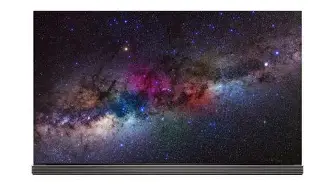
The LG G6 was released as part of the prestigious "Signature" line, a designation LG reserves for products that represent the absolute zenith of their technological and aesthetic capabilities. The most striking feature of the G6 is its "Picture-on-Glass" design. By mounting an ultra-thin OLED panel (a mere 2.57mm thick) onto a translucent glass plate, LG created a television that appeared more like a piece of modern art than a consumer electronic device. This design wasn't just for show; it provided structural rigidity to the incredibly thin panel while creating a floating effect that remains impressive even by today’s standards.
Beyond the screen itself, the G6 features a unique integrated soundbar stand. Recognizing that an ultra-thin TV usually suffers from poor audio quality due to a lack of physical cabinet space, LG partnered with harman/kardon to build a powerful speaker system directly into the base of the TV. This base can be folded behind the screen for wall mounting, ensuring that the high-quality audio remains functional regardless of how the TV is installed. Inside the panel, the G6 utilizes LG’s "Ultra Luminance" technology and a high-grade 10-bit panel capable of reproducing over a billion colors. It was among the first sets to support both HDR10 and Dolby Vision, ensuring compatibility with the highest standards of high dynamic range content available.

Pros and Cons of the LG G6
- Pro: Extraordinary industrial design with the Picture-on-Glass aesthetic that remains a benchmark for luxury televisions.
- Pro: Integrated 4.2 channel 60W soundbar tuned by harman/kardon provides significantly better audio than almost any standard flat-panel TV.
- Pro: Premium build materials, including glass and metal, offer a level of durability and "heft" missing from cheaper plastic models.
- Pro: Excellent peak brightness for its generation, particularly in HDR modes, thanks to the high-binning of the Signature series panels.
- Con: The integrated soundbar makes the TV considerably heavier and more cumbersome to move compared to modular setups.
- Con: Signature pricing meant that at launch, the value proposition was skewed heavily toward those paying for aesthetics rather than just pixels.
- Con: As an early OLED, it lacks some of the advanced burn-in mitigation tools found in much newer 2020s-era LG models.
LG C6 OLED: Curved Immersion and 3D Capabilities
The LG C6 occupies a unique place in the history of OLED. It was released during the final years of two major trends: curved screens and passive 3D technology. Unlike its flat-screen sibling (the B6), the C6 featured a gentle concave curve designed to create a more immersive viewing experience by keeping the edges of the screen at a more equidistant range from the viewer's eyes. While the industry has since moved away from curved displays for home televisions, many enthusiasts still seek out the C6 for the specific "wrap-around" feel it provides in gaming and cinematic viewing.
Perhaps most importantly, the C6 is often cited as one of the best 3D televisions ever made. Because it uses a 4K OLED panel combined with passive 3D technology (using lightweight polarising glasses like those in cinemas), it avoids the flicker and dimness issues associated with active shutter 3D. The infinite contrast of OLED makes 3D images "pop" with a level of depth and clarity that traditional LED/LCD sets could never match. For the niche community of 3D Blu-ray collectors, the C6 is a "holy grail" device. Under the hood, it shares much of the same processing power as the G6, offering identical perfect blacks and vibrant color reproduction, albeit in a more traditional plastic-framed chassis.
Pros and Cons of the LG C6
- Pro: One of the last and greatest 4K 3D televisions, offering a spectacular 3D experience that is no longer available in new models.
- Pro: The curved screen can reduce reflections from side-room light sources and provides a unique aesthetic for specific room layouts.
- Pro: Offers essentially the same core OLED picture quality as the higher-end models at a significantly lower price point.
- Pro: Supports both HDR10 and Dolby Vision, ensuring it stays relevant for modern streaming and 4K Blu-ray content.
- Con: Curved screens can suffer from distorted geometric reflections if there are bright lights positioned directly behind the viewer.
- Con: The stand and bezel are primarily plastic, lacking the premium "jewel-like" feel of the Signature G6 series.
- Con: Onboard audio is standard; while decent, it cannot compete with the integrated soundbar found on the G6.
Head-to-Head Comparison Table
To better understand how these two models differ in their technical execution, we can look at their core specifications side-by-side. It is important to note that while the panels are fundamentally similar, the "bins"—or the quality selection process—were generally higher for the G-series, leading to slightly better uniformity and peak brightness on average.
Looking for the best TVs & Home Theater deals on Amazon?
See Deals →| Feature | LG G6 Signature OLED | LG C6 OLED |
|---|---|---|
| Design Style | Picture-on-Glass (Flat) | Curved Cinema Screen |
| Display Resolution | 4K Ultra HD (3840 x 2160) | 4K Ultra HD (3840 x 2160) |
| 3D Support | Yes (Passive) | Yes (Passive) |
| HDR Formats | HDR10, Dolby Vision | HDR10, Dolby Vision |
| Audio System | 60W 4.2 Channel harman/kardon Soundbar | 40W 4.0 Channel harman/kardon System |
| Processor | Perfect Mastering Engine | Perfect Mastering Engine |
| Smart Platform | webOS 3.0 (Upgradable) | webOS 3.0 (Upgradable) |
| Primary Build Material | Glass and Aluminum | High-grade Polycarbonate and Metal |
Performance Analysis: Real-World Use Cases
When comparing these two sets, we must look at how they perform in the environments where buyers actually use them. A TV is not just a spec sheet; it is a tool for media consumption that interacts with the lighting, acoustics, and seating arrangements of a living room.
The Cinematic Experience
For the pure cinephile, the G6 arguably holds a slight edge due to its flat profile. Most directors frame their shots for flat screens, and the G6’s Picture-on-Glass design minimizes distractions, making the screen appear as if it is floating in space. The G6 also tends to handle "near-black" chrominance overshoot slightly better than the C6, a technical term for how the TV transitions from total black to very dark grey. However, if your cinematic taste includes 3D titles like Avatar or Gravity, the C6 is the undisputed champion. The curve on the C6 actually complements 3D by adding a slight sense of peripheral depth that flat panels lack.
Gaming and Responsiveness
In terms of gaming, both TVs were groundbreaking at the time but lack the HDMI 2.1 features (like 4K/120Hz or VRR) found in modern LG C series models. However, for 60Hz gaming on consoles like the PS4 Pro or Xbox One X (and even modern consoles in "resolution mode"), both deliver a stunning experience. The C6 is particularly popular among racing game fans, where the curved screen provides a more natural cockpit view. Input lag on both sets is respectable for their era, sitting at roughly 34ms, which is perfectly fine for single-player RPGs and adventure games, though potentially a heartbeat slow for competitive esports.
Smart TV Functionality and Longevity
Both sets run LG’s webOS. While webOS 3.0 was revolutionary for its time with the "Magic Remote" and its "bean bird" setup assistant, as these TVs age, the internal processors can start to feel sluggish compared to modern external streaming sticks. From a value perspective, the "Smart" side of the TV is a wash—most users will eventually pair either set with an Apple TV 4K or a Shield TV to keep the software experience fast and up to date.
LG G6 vs. LG C6 Buying Guide
Choosing between these two models involves identifying which "type" of viewer you are. Because these models are now older, availability often dictates the choice, but knowing what to look for can save a buyer from a costly mistake.
Look for the G6 if:
You prioritize aesthetic perfection and build quality. The G6 is a "forever" design; it will look modern ten years from now because of its minimalist glass construction. It is also the better choice for rooms where you cannot or do not want to install a separate sound system, as its built-in soundbar is genuinely impressive. From a collection standpoint, the G6 is a landmark of TV history and holds its value better as a "Signature" item.
Look for the C6 if:
You are a 3D enthusiast or a fan of curved displays. The C6 offers nearly 95% of the G6's picture performance for significantly less money. It is the practical choice for someone who wants the OLED experience (perfect blacks, vibrant colors) but plans on using their own surround sound system, rendering the G6's expensive soundbar unnecessary. It is also better suited for a corner placement where the curved edges can help the TV "fit" the geometry of the room better.
Discover deals on TVs & Home Theater — updated daily.
Shop Amazon →Maintenance and Burn-In Considerations
When purchasing a used version of either model, the primary concern is panel health. Early OLEDs are more susceptible to "burn-in" or permanent image retention than modern Evo or MLA-based panels. Buyers should always check for:
- Static logo retention (especially from news tickers or sports channels).
- Overall brightness uniformity using a full-screen grey or red slide.
- Dead pixels along the edges of the glass (particularly on the G6).
The Evolution of Value: Why the G6 and C6 Still Matter
In the current market, "value" is often synonymous with "the best specs for the lowest price." However, the LG G6 and LG C6 remind us that value can also be found in unique features that the market has abandoned. There is no modern equivalent to the G6’s Picture-on-Glass design that doesn't cost an astronomical sum, and there are virtually no 4K 3D TVs being manufactured today.
The G6 represents the prestige of the OLED platform—a statement piece that proved televisions could be luxury items. The C6 represents the experimental phase of display technology, providing a niche but highly satisfying experience for those who love the "wraparound" effect of a curve or the depth of passive 3D. While modern TVs are undoubtedly brighter and have better gaming features, they often feel like anonymous black rectangles. The G6 and C6 have character.
Conclusion
Deciding which television offers better value depends heavily on your definition of the word. If value is defined by the quality of materials, the longevity of design, and an all-in-one premium experience, the LG G6 Signature OLED is the winner. It remains one of the most beautiful electronic devices ever mass-produced, and its superior sound system and glass-constructed panel offer a sense of "prestige value" that purely technical models lack.
However, if value is defined by the price-to-performance ratio and the inclusion of unique viewing features, the LG C6 OLED takes the crown. By offering the same legendary OLED black levels and color accuracy as the flagship models, but adding the now-extinct features of a curved screen and passive 3D support, the C6 provides a library of experiences that simply cannot be found in a modern showroom. For the average buyer, the C6 was the smarter purchase at launch, but for the collector or the design-conscious minimalist, the G6 remains the gold standard of what an OLED TV can be. Both remain testament to LG’s dominance in the field, representing a time when TV manufacturers were not afraid to take bold risks with design and functionality.